
shockwave therapy
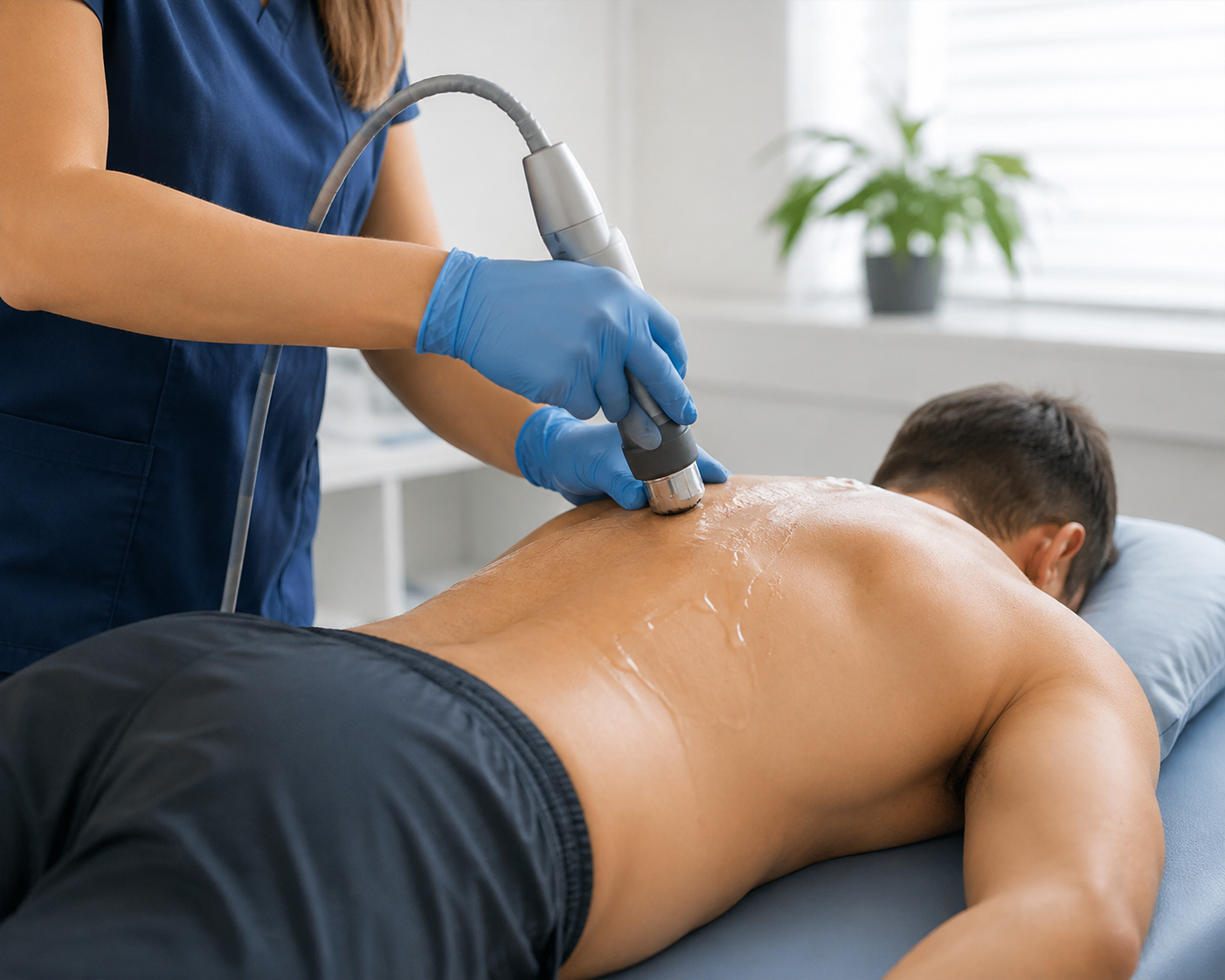
Shockwave therapy (also called extracorporeal shock wave therapy or ESWT) is a non-invasive treatment that delivers acoustic (sound) pressure waves to targeted body tissues.
Originally developed in the 1980s for breaking up kidney stones (lithotripsy), it was later adapted for orthopedic and regenerative uses. Devices generate either focused shock waves (higher energy, deeper penetration for specific targets) or radial pressure waves (lower energy, broader and more superficial distribution). Sessions are typically short (often 5–15 minutes), require little to no downtime, and are usually given in a series of 3–5 treatments.
How it works
The mechanical energy from the waves triggers mechanotransduction—cells convert the physical stimulus into biological responses. Effects include:
Increased blood flow and new blood vessel formation (neovascularization)
Stimulation of collagen production and tissue repair
Reduced inflammation and pain signaling
Breakdown or resorption of calcium deposits in some cases
Recruitment of regenerative cells and growth factors
These processes help promote healing in chronic or poorly healing tissues rather than simply masking symptoms.
Conditions commonly addressed
Evidence is strongest for certain chronic musculoskeletal problems that have not fully responded to conservative care (rest, physical therapy, orthotics, etc.). Key indications recognized by groups such as the International Society for Medical Shockwave Treatment (ISMST) and supported by clinical literature include:
Tendinopathies and soft-tissue conditions
Plantar fasciitis (with or without heel spur) — among the best-supported uses; some devices have FDA clearance for this
Achilles tendinopathy (insertional or mid-portion)
Calcific tendinopathy of the shoulder
Lateral epicondylopathy (tennis elbow)
Greater trochanteric pain syndrome / gluteal tendinopathy
Patellar tendinopathy (jumper’s knee)
Other chronic tendinopathies (e.g., proximal hamstring)
Bone-related conditions
Delayed bone healing or nonunion (fractures that are slow or fail to heal)
Stress fractures
Early-stage avascular necrosis (without major joint collapse) and certain osteochondral lesions
Other applications with growing or supportive evidence
Myofascial pain / trigger points
Some cases of osteoarthritis-related pain
Delayed or non-healing wounds, certain ulcers, and burn scars
Spasticity associated with neurological conditions (e.g., stroke, multiple sclerosis, cerebral palsy)
Emerging or specialized uses: erectile dysfunction (low-intensity protocols targeting penile tissue vascularization), chronic pelvic pain, and limited skin or soft-tissue indications
Results vary by condition, energy level used, treatment protocol, and individual factors. It is generally considered when first-line treatments have been insufficient and as a potential way to avoid or delay more invasive options such as injections or surgery. Contraindications typically include treatment over a malignant tumor, pregnancy (fetus in the treatment field), and certain coagulation disorders for higher-energy applications.
Overall, shockwave therapy is valued as a regenerative, outpatient option that aims to restart stalled healing processes in stubborn musculoskeletal problems.